Old Rubber Tree Road and the Quiet Side of Chiang Mai Travel
A reflective journey through roadside trees, village life, and temple heritage between Chiang Mai and Lamphun
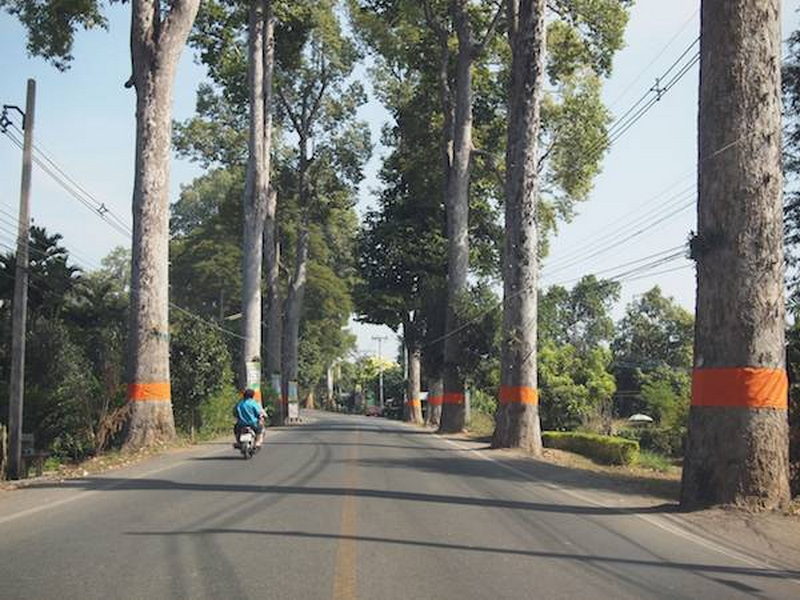
Some of the most memorable journeys in northern Thailand begin without a famous viewpoint or a crowded landmark. Old Rubber Tree Road offers that kind of experience. Stretching through Saraphi District in Chiang Mai and toward Mueang Lamphun District in Lamphun, the route is valued for its mature rubber trees, unhurried atmosphere, and connection to communities that have developed along an important regional corridor. The road is not a conventional attraction with a single entrance or a fixed list of activities. Its character appears gradually: in the repeating rhythm of tree trunks, the shade beside the roadway, small signs of daily work, and changing views between built-up areas and greener stretches. For curious visitors, this makes it one of the more rewarding Unseen Attractions In Chiang Mai. A visit here is best approached as an observation-led outing rather than a checklist. The interest lies in noticing how landscape, transport, agriculture, faith, and settlement meet. With a respectful pace, the journey can become a thoughtful part of Chiang Mai Travel and a gentle introduction to the cultural landscape shared by Chiang Mai and Lamphun.
Reading the Landscape Along the Road
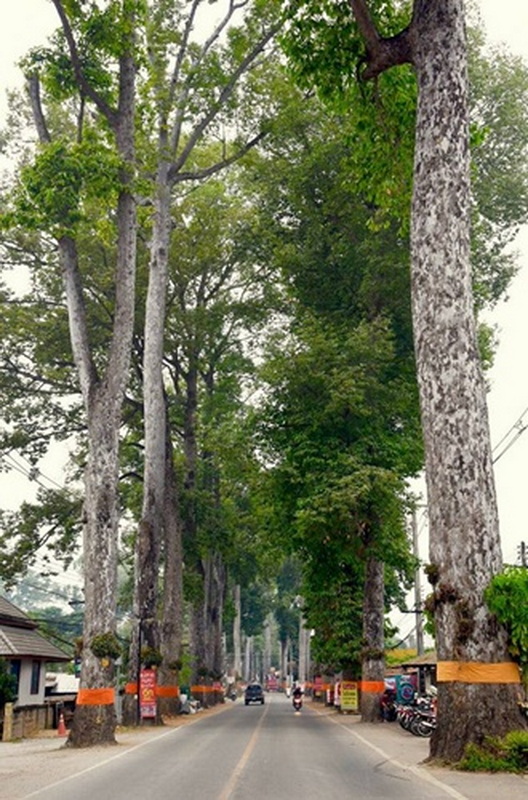
The defining feature of The Rubber Tree Road is its avenue of mature rubber trees. Their tall, pale trunks and spreading canopies create a visual rhythm that changes with the light, weather, and season. In some stretches, the trees feel like a deliberate frame for the road; in others, they blend into houses, walls, utility lines, and patches of cultivated land. The appeal is not a single dramatic vista but the continuity of the landscape.
Rubber trees are also a reminder that this is a lived environment, not a decorative park created solely for visitors. The surrounding area reflects the long relationship between residents, roads, agricultural land, and regional trade. Even when visitors cannot see every aspect of cultivation, the trees encourage a more attentive way of looking at the journey. Their presence connects a seemingly ordinary road with the economic and environmental history of the wider north.
The atmosphere can be especially compelling during quieter periods of the day, when shade softens the roadside and local movement becomes easier to observe without intrusion. Visitors should avoid stopping where they obstruct traffic and should treat private homes, work areas, and people going about their routines as part of a community landscape rather than as photo props. A slower pace and a restrained camera are often the most appropriate ways to appreciate the setting.
An Offbeat Experience for Curious Travelers
Unlike a destination built around one monument, the Saraphi Old Rubber Tree Road rewards short pauses and changing impressions. A visitor might notice the contrast between old trees and newer development, the sound of traffic moving beyond the canopy, or the way village lanes branch away from the main route. These details create a sense of place that is easy to miss when traveling only between major city attractions.
This is where the road becomes more than a scenic drive. It offers an opportunity to observe northern Thai daily life at an ordinary scale: modest roadside commerce, planted plots, local movement, and the practical relationship between residents and the road. Such observations should remain grounded and respectful. The goal is not to turn everyday life into a spectacle, but to understand how a regional route can carry memory and identity even when it is not heavily promoted.
For independent explorers, the area can complement a wider journey between Chiang Mai and Lamphun. Rather than filling every moment with scheduled sightseeing, travelers can leave room for visual discovery and reflection. The experience suits people who enjoy landscape photography, cultural observation, quiet cycling or driving environments where appropriate, and journeys in which the route itself is part of the destination.
How to Experience the Route with Care
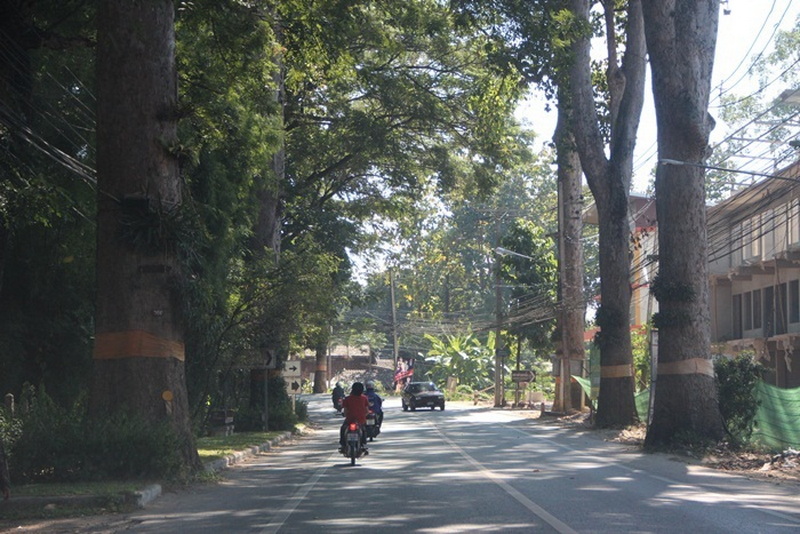
A considerate visit begins with awareness that the road remains part of the local transport network. Traffic conditions can vary, so pedestrians and photographers should choose safe places to pause, remain alert, and never stand in the roadway for a better image. If a particular tree, house, or activity appears interesting, distance and discretion matter more than getting a close-up view.
The landscape also benefits from simple environmental care. Visitors can carry away rubbish, avoid damaging trees, and refrain from attaching objects to trunks or entering cultivated areas without permission. Mature roadside trees may look robust, but they are living parts of a connected landscape. Protecting the quiet character of the route helps preserve the very quality that makes it meaningful.
Respect extends to religious and community spaces encountered during the wider journey. Clothing should be suitable when entering a temple, shoes should be removed where requested, and photography should follow posted guidance or local expectations. Asking before photographing people is a small but important gesture. These practices make the experience more reciprocal and help ensure that exploration does not come at the expense of local dignity.
A Landscape Between Two Northern Cities
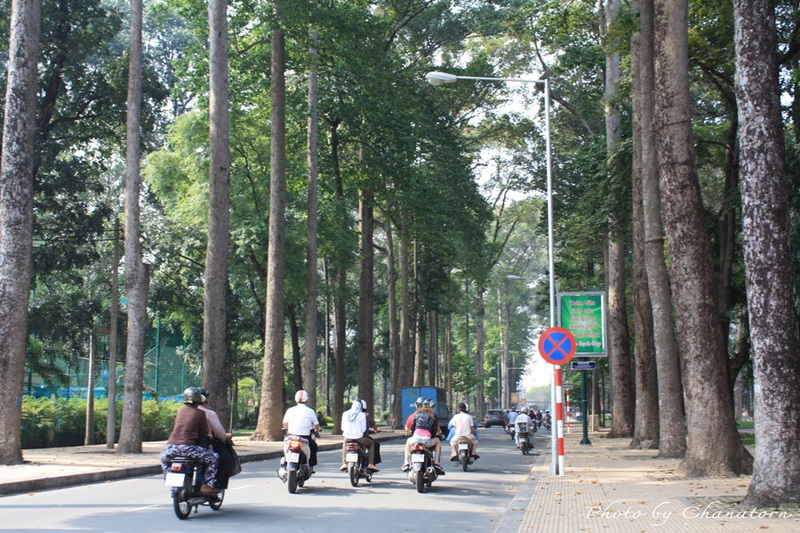
The phrase Rubber Tree Road Chiang Mai-Lamphun describes more than a scenic name. It points to a route through a region where the boundaries between urban expansion, village life, agriculture, and heritage are not always sharply divided. Saraphi and the surrounding districts have long served as a connecting landscape, allowing movement between the larger centers while retaining quieter local areas along the way.
That in-between quality gives the road its distinctive travel value. Visitors can sense the contrast between Chiang Mai’s busy visitor economy and the more dispersed rhythms found farther along the route. The change may be gradual rather than dramatic, which is precisely why attentive travel is useful. A roadside tree, an old wall, or a temple approach can reveal continuity that is difficult to understand from a central-city itinerary alone.
The route is therefore well suited to travelers who want to broaden their idea of what counts as a destination. It does not need elaborate interpretation to be worthwhile. Watching how the canopy, buildings, roads, and religious landmarks fit together can provide a grounded understanding of the region. In this setting, discovery comes from context: seeing familiar northern landscapes as parts of a living network rather than isolated attractions.
Temple Heritage Beyond the Tree Canopy
The road’s quiet scenery becomes more meaningful when placed beside the region’s continuing religious traditions. Two nearby temples offer distinct opportunities to reflect on Lamphun’s heritage while keeping the visit grounded in respectful observation.
Wat Phra Yuen
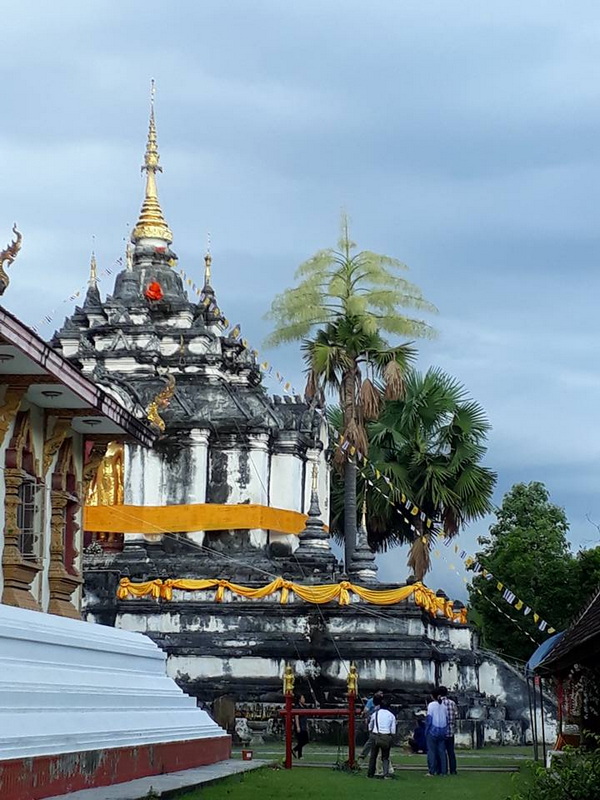
Wat Phra Yuen in Lamphun adds a significant heritage dimension to a journey along the road. The temple is associated with Lamphun’s long Buddhist and Lanna history, and its name is commonly understood in relation to standing Buddha images. Its architectural setting invites visitors to consider how religious sites have served as places of devotion, community connection, and cultural continuity across generations.
Visitors should enter with quiet attentiveness and follow the temple’s local customs. Dress should be respectful, voices kept low, and sacred images treated with care. Rather than rushing through for photographs, allow time to notice the arrangement of the grounds and the relationship between worship, architecture, and daily community life.
Wat San Pa Yang Luang
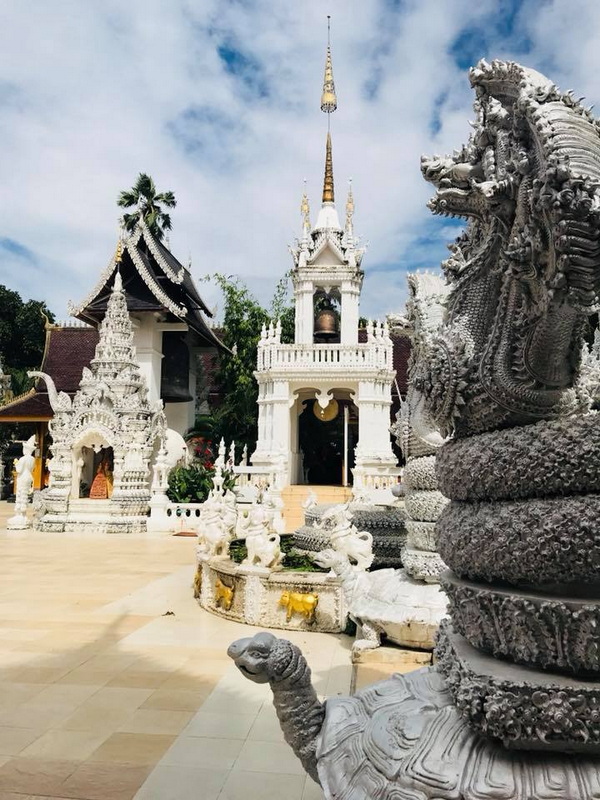
Wat San Pa Yang Luang offers another perspective on the heritage of Lamphun and the wider northern region. The temple is known for its Lanna artistic character and religious setting, making it a useful companion to the more open-ended experience of the roadside landscape. Here, cultural meaning is expressed through a place maintained for worship and community use, not simply through objects on display.
A respectful visit means observing whether ceremonies or private acts of devotion are taking place before exploring. Avoid touching religious features, follow any instructions from temple caretakers, and ask permission for sensitive photography. Approached in this way, the temple can deepen an understanding of the area’s historical identity without reducing living traditions to scenery.
Let the Route Set the Pace
Old Rubber Tree Road is best remembered not as a single attraction to conquer, but as a landscape to notice. Its mature trees, local surroundings, and connections to temple heritage create an experience that rewards patience rather than speed. For travelers seeking Unseen Attractions In Chiang Mai, the road offers a quieter way to understand the region, while its wider Chiang Mai Travel context reveals how Chiang Mai and Lamphun remain linked by everyday life, history, and movement. Leave space for observation, travel gently, and allow the road to tell its story at its own pace.